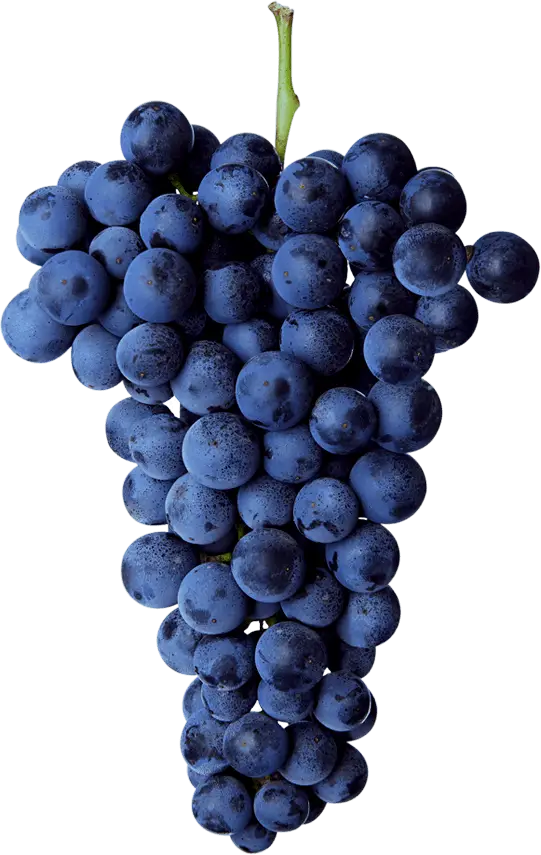

GEORGIAN WINE
Georgia has long enjoyed its status as the homeland of wine. The world’s oldest places of viticulture and winemaking have been discovered here. The history of wine began during the Neolithic period, which is supported by archaeological evidence. A few decades ago, archaeologists found several grape pips of the VI millennium B.C. among the ruins of the settlement of Dangreuli Gora, in the valley close to Marneuli, a town in Kvemo (lower) Kartli, south of Tbilisi, of which morphological and ampelographic characteristics were identical to those of Vitis Vinifera Sativa.
More recently renewed excavations of the Gadachrili Gora settlement uncovered other grape pips of the Neolithic period. In addition to finding wine remains in the ruins of the settlement, archaeologists studied several fragments of clay vessels found there. A chemical analysis of the clay vessels revealed deposits of calcium salts of tartaric (wine) acid. Such deposits of tartaric acid on the internal surface of this clay pottery could only be the result of the presence of wine or grape juice. This discovery confirmed that the relationship between humans and the vine began in the VI millennium B.C. and included not only the first cultural vine but also the first remains of wine found within the territory of Georgia.

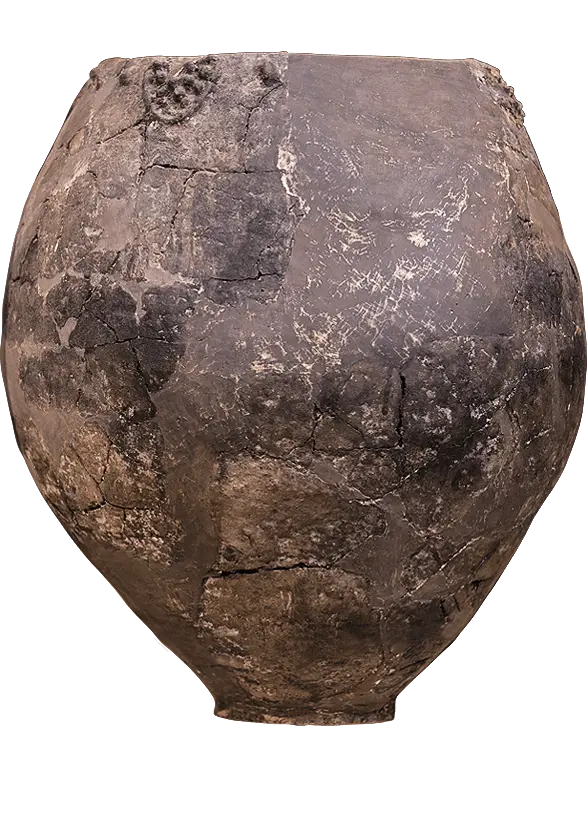
Georgian winemaking is renowned for its unique methods. The tradition of making wine in Qvevri is a key sign that distinguishes Georgian wine from all other wines in the world. There are many different technologies for producing wine in Qvevri in Georgia, with differences in eastern Georgia, particularly in Kakheti, and western Georgia, where the rules and methods of winemaking in Qvevri are very different from each other. In order to make Kakhetian amber wine, pips are left to ferment in contact with marc and stalks for 6 months;
However, winemaking is different in Kartli, Imereti, Racha-Lechkhumi, Guria, Samegrelo, and other regions of Georgia. In these regions, white varieties of grapes are not left to ferment in contact with the marc and stalks for 5–6 months, which is why the wines are completely different throughout the country. In November 2013, the ancient Georgian method of winemaking in qvevri was included in the UNESCO List of World Cultural Heritage.
We have 30 Protected Designation of Origin in Georgia. Atenuri, Akhasheni, Kindzmarauli, Gurjaani, Vazisubani, Teliani, Kardenakhi, Kakheti, Manavi, Mukuzani, Napareuli, Sviri, Tvishi, Tibaari, Kvareli, Tsinandali, Khvanchkara, Tokethi, Saperavi, Khashmi, Bolnisi, Salkhino Ojaleshi, Akhmeta, Tsarapi, Akhoebi, Zegaani, Okureshis, Usakhelauri, Asuretuli Shala, Okami.
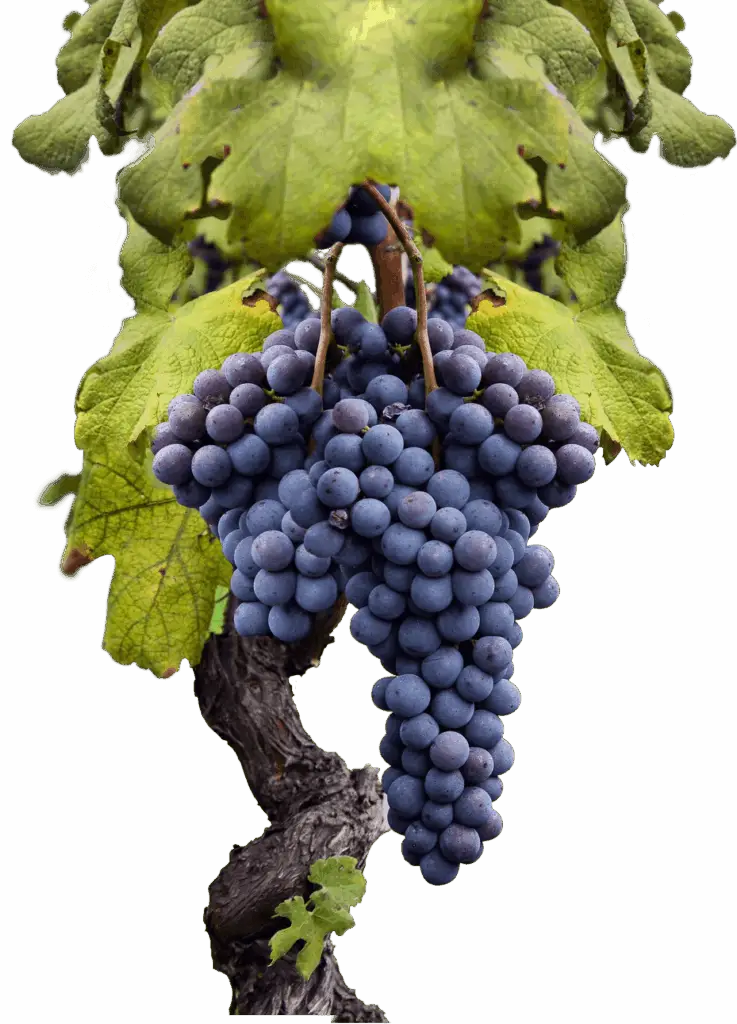
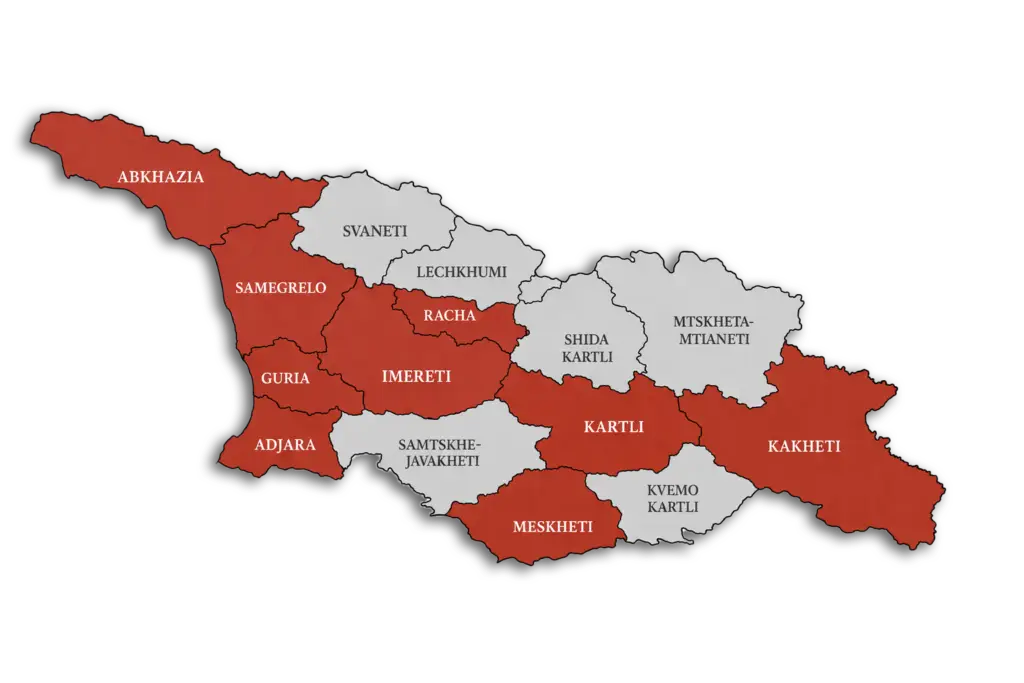
Georgia has 6 wine regions – Kakheti, Kartli, Imereti, Racha, Black Sea coastal zone, and Meskheti. Kakheti is one of the most important Georgian wine regions that occupies the easternmost part of the country. Kartli is another distinct winemaking region in the central-eastern part of Georgia wine country. Imereti Wine Region is located in the western part, and it is one of the ancient regions of the Georgia wine country. Racha-Lechkhumi is one of the smallest wine regions in Georgia. However, wines from here are of high quality and very distinctive.
The highest mountainous region, Meskheti, is located in the southern part of Georgia’s wine country. Here, vineyards are mostly planted on terraces at an altitude of 900–1700 m in the valleys of the Mtkvari River. On the Black Sea Coast, where vineyards are located on lower altitudes, it is divided into Adjara, Abkhazia, Guria, and Samegrelo wine regions.
Today, approximately 530 different varieties of grapes are approved in nine regions for winemaking in Georgia. Over 425 of them are still preserved, and the rest are being sought after. Some of the varieties are widespread; however, the majority are very rarely grown, mostly in wine collections or in experimental vineyards. In recent years, vine growers and winemakers have been very actively involved in the cultivation and industrial processing of ancient and rare varieties of vine and wine.